Jaw Clicking, Headaches, and Tinnitus: Could They Be Connected?
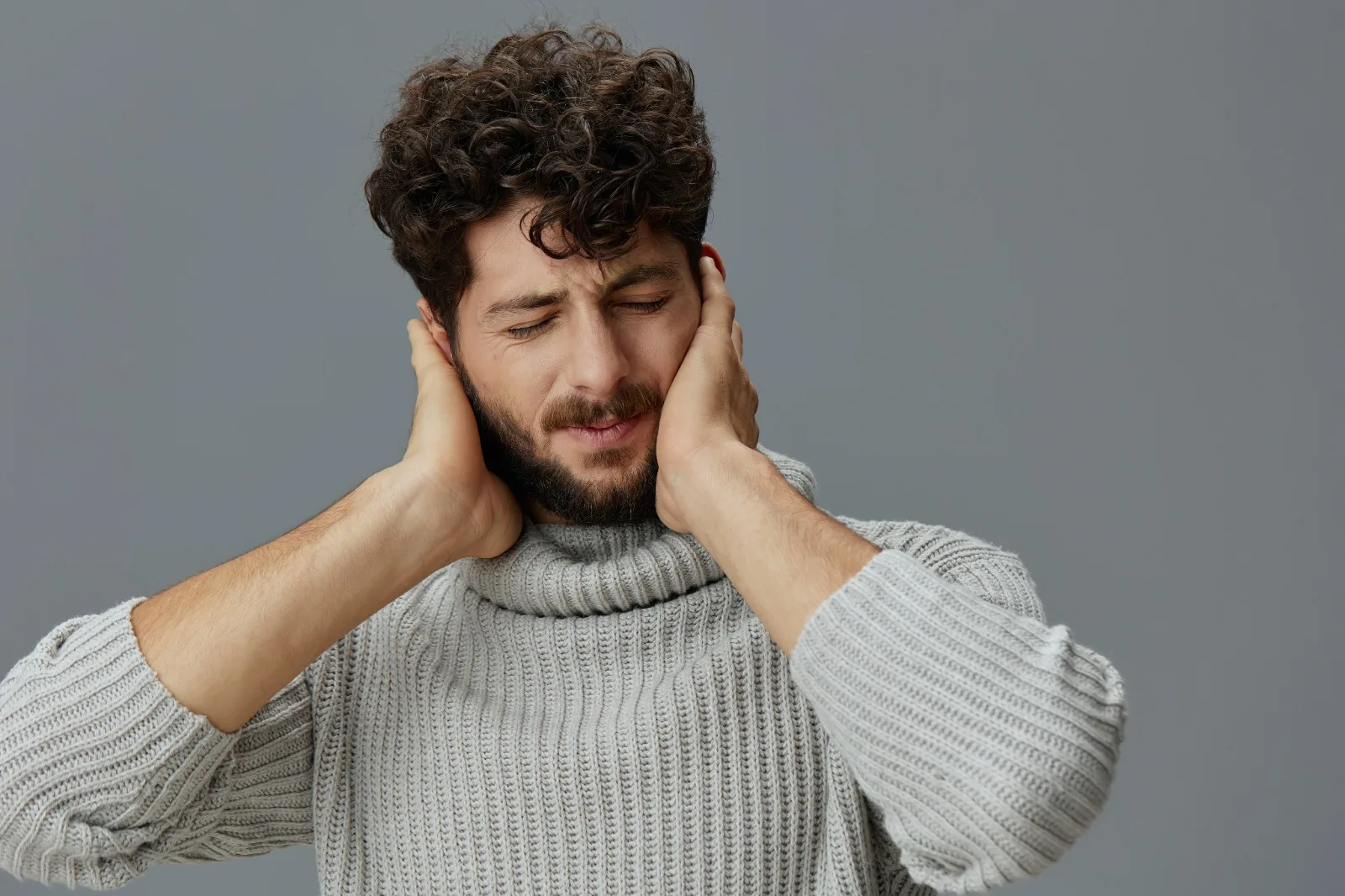
Many people live with multiple symptoms that seem unrelated, such as headaches, ringing in the ears, and jaw clicking when chewing. Often, they visit different specialists for each concern: a physician for headaches, an audiologist for hearing issues, a dentist for jaw discomfort. What's surprising is that these symptoms can share a common link. At Aura Dental & Wellness, we help patients understand how the jaw, airway, muscles, and nerves are interconnected, and how treating one area can bring relief across the body.
It's easy to think of the body as separate systems, each with its own doctor. But your body doesn't recognize those boundaries. Every second, your muscles, joints, nerves, and airway communicate with one another. Sometimes, the symptom you notice isn't where the problem begins, and that's where whole-body dentistry makes the difference.
"The body rarely works in isolation. When one part struggles, another often tries to compensate."
Listening to What Your Jaw Is Telling You
The temporomandibular joint (TMJ) is one of the hardest-working joints in the body. Every conversation, every meal, every yawn depends on it. Because it's positioned so close to the ears, facial muscles, and nerves, even a small imbalance can create effects that seem unrelated. A clicking jaw isn't always painful, but it shouldn't always be ignored either. For some people, it's simply the sound of a joint moving differently than it should. For others, it's the first clue that the surrounding muscles are working harder than they were designed to.
Why Headaches May Have More Than One Cause
Most people blame headaches on stress, dehydration, or lack of sleep. While those are certainly common triggers, persistent headaches can sometimes begin much closer to home, inside the muscles responsible for chewing and stabilizing the jaw. When those muscles remain tense for hours or even throughout the night, they can refer pain into the temples, forehead, neck, and behind the eyes. It's why some patients spend years treating headaches without ever considering that their bite or jaw function could be part of the conversation. Treating the headache may provide temporary relief. Understanding why it keeps returning is what creates lasting change.
Can Your Jaw Affect Your Ears?
Tinnitus, the persistent ringing, buzzing, or humming in the ears without an external sound, is one of the more surprising connections to TMJ disorders. While tinnitus can arise from many causes, researchers continue to study its link to jaw dysfunction because of the close anatomical relationship between the temporomandibular joint and the structures surrounding the ear. Not everyone with TMJ experiences tinnitus, and not everyone with tinnitus has a jaw disorder, yet for some patients, improving jaw function has eased the intensity of symptoms they once thought were permanent. The takeaway isn't that every ringing ear begins in the jaw, but rather that our bodies are far more interconnected than we often realize.
Looking Beyond Individual Symptoms
Modern healthcare has become incredibly specialized, and while that's a remarkable achievement, it can sometimes lead us to view symptoms in isolation rather than asking how they might connect. At Aura Dental & Wellness, we believe comprehensive care begins with curiosity, not just focusing on a clicking jaw or worn teeth, but asking broader questions: How are you sleeping? Do you wake with headaches? Have you noticed jaw tension, neck pain, or ringing in your ears? These conversations often uncover patterns that would otherwise remain hidden, because treating symptoms without understanding their relationship is like replacing a warning light without checking the engine.
This is the foundation of our approach to TMJ, airway, and sleep apnea care, where the jaw joint, the muscles around it, and the airway are assessed as one connected system rather than three separate complaints.
When Is It Time to Seek an Evaluation?
If you've experienced jaw clicking, chronic headaches, tinnitus, facial pain, or difficulty chewing, it may be worth considering whether these symptoms are connected rather than coincidental.
A comprehensive evaluation can assess your jaw joints, bite alignment, muscles, airway, and overall oral health to identify potential contributing factors. Even if your symptoms turn out to have different causes, understanding the complete picture allows you to make informed decisions about your health.
"Your body is always communicating. The question is whether we're listening."
If you've been managing headaches with medication, ignoring jaw clicking because "it doesn't hurt," or accepting ringing in your ears as something you'll always have, it may be time to look a little deeper. Schedule a comprehensive consultation with Aura Dental & Wellness to explore whether your symptoms could share a common thread. Sometimes the path to relief begins not by treating each symptom separately, but by discovering the connection between them.
Learn more about our TMJ and airway-focused treatment, or read about the whole-body perspective behind our TMJ philosophy.
References
- American Academy of Orofacial Pain. Guidelines for Assessment, Diagnosis, and Management of Temporomandibular Disorders.
- National Institute of Dental and Craniofacial Research (NIDCR). Temporomandibular Joint Disorders (TMJ). nidcr.nih.gov
- American Dental Association (ADA). Temporomandibular Disorders and Oral Health. ada.org
- Mayo Clinic. Tinnitus: Symptoms and Causes. mayoclinic.org
- National Institutes of Health (NIH). Temporomandibular Disorders and Their Association with Headache and Tinnitus.
- Cleveland Clinic. TMJ Disorders: Symptoms, Causes, and Treatment. my.clevelandclinic.org