Oral Appliance Therapy vs. CPAP: Which Sleep Apnea Treatment Fits You?
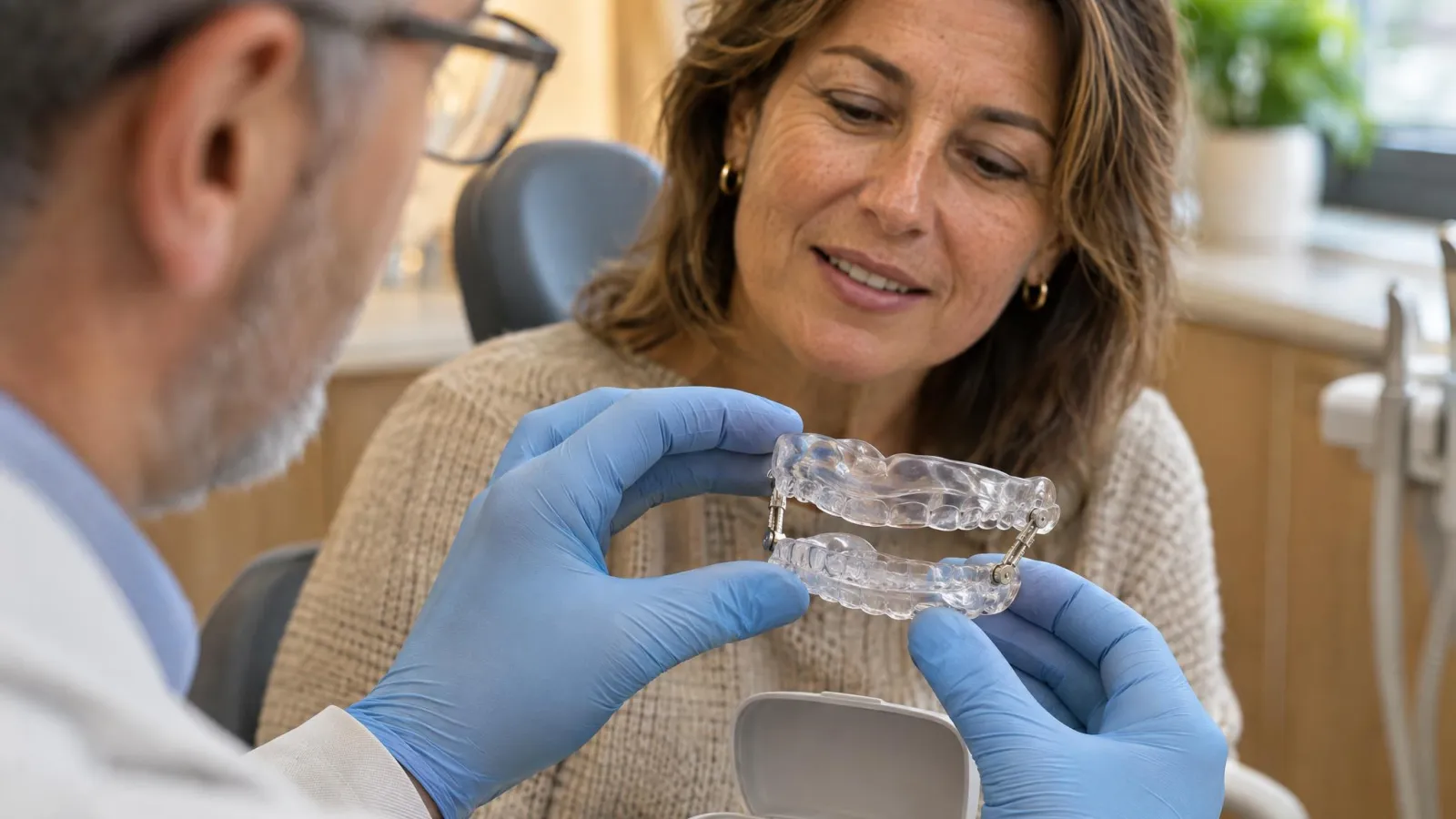
CPAP works well when you wear it. The trouble is that many people don't keep wearing it. They pull the mask off at 2 a.m., the machine ends up in a closet, and their sleep apnea goes untreated again. If that sounds familiar, a custom oral appliance may be a better option for you. Here is how the two treatments compare and how to tell which one fits you.
First, the Short Version
Both treatments do the same job. They keep your airway open while you sleep so that your breathing doesn't repeatedly pause. CPAP uses air pressure to hold the airway open. An oral appliance holds the lower jaw slightly forward, which brings the tongue and soft tissues forward with it.
The American Academy of Sleep Medicine and the American Academy of Dental Sleep Medicine published a joint clinical guideline on this question. It recommends a custom-made, adjustable oral appliance for adults with obstructive sleep apnea who can't tolerate CPAP or who prefer another option. It does not recommend an over-the-counter mouthguard.
How the Two Treatments Compare
| Factor | CPAP | Custom oral appliance |
|---|---|---|
| How it works | Pressurized air through a mask | Holds the lower jaw slightly forward to keep the airway open |
| Best evidence for | All severities, including severe OSA | Mild to moderate OSA, and CPAP-intolerant patients at any severity |
| Comfort and noise | Mask, hose and machine noise; some people feel claustrophobic | Silent; fits like a thin retainer |
| Travel | Needs a power source and a carry case | Fits in a pocket |
| Common side effects | Dry mouth, mask leaks, skin irritation | Temporary jaw or tooth soreness, and possible bite changes over time that need monitoring |
| Who prescribes it | Sleep physician | Sleep physician diagnoses; a trained dentist fits the device and adjusts it |
The most important factor is the one people overlook. The best treatment is the one you will actually use every night. CPAP is more powerful in a sleep lab. An appliance you wear all night can still protect you better than a CPAP machine you take off halfway through the night.
Are You a Good Candidate for an Oral Appliance?
You may be a strong candidate if most of these apply to you:
- A sleep study confirmed obstructive sleep apnea. Oral appliances are best supported for mild (AHI 5–15) and moderate (AHI 15–30) OSA.
- You tried CPAP and couldn't stick with it, or you know you won't.
- You have enough healthy teeth on both arches to anchor the device.
- Your jaw joints can comfortably move forward. This is why we screen your TMJ first.
- You travel often, camp, or share a bed with a light sleeper.
An appliance may not be the right first step if you have severe OSA and can tolerate CPAP, active gum disease, many missing teeth, or significant, untreated jaw joint pain. If you have severe OSA, the device can still play a role, either combined with CPAP or as a backup for travel. Your physician should be part of that decision.
What Treatment Looks Like, Step by Step
- Screening and referral. We screen for airway warning signs like snoring, morning headaches, grinding, a scalloped tongue and daytime fatigue. If we suspect sleep apnea, we coordinate a sleep study. Only a physician can diagnose sleep apnea.
- Airway and TMJ evaluation. We assess jaw function, bite and muscles, and look for airway contributors such as tongue posture and nasal breathing.
- Custom fabrication. We take digital impressions and a bite registration, and design an adjustable device made to your measurements.
- Titration. Over several visits, we advance the jaw position in small steps until symptoms improve. Most of the treatment's success comes from this step.
- Follow-up sleep test. Your physician confirms that the device is actually lowering your AHI. Feeling better isn't enough proof on its own.
- Annual checks. We monitor your bite, teeth and joints so that small changes stay small.
The Root-Cause Question Most Clinics Skip
A device manages the airway while you sleep. It doesn't explain why your airway collapses. At Aura, we also look at the contributors behind it, such as mouth breathing, low tongue posture, a narrow arch, and nasal obstruction. Myofunctional therapy can retrain the tongue and facial muscles that support the airway. For some patients, it improves results and comfort with an appliance. Our goal is the least treatment that gives you lasting results.
New to sleep apnea? Start with our overview of the condition, or learn more about our TMJ, airway and sleep apnea care.
Frequently Asked Questions
Can a dentist diagnose sleep apnea?
No. A dentist can screen for warning signs, but a physician diagnoses sleep apnea with a sleep study, either at home or in a lab. Your dentist then fits and adjusts the appliance in coordination with your physician.
Will an over-the-counter snore guard work the same way?
Boil-and-bite snore guards aren't recommended for sleep apnea. They can quiet snoring while the apnea continues, and they can strain your jaw joint. The clinical guideline specifically recommends custom, adjustable devices.
Does insurance cover oral appliance therapy?
Oral appliances for diagnosed OSA are usually billed to medical insurance, including Medicare when its requirements are met, rather than dental insurance. Coverage varies, so our team can review your benefits before you start.
Will it change my bite?
Over long-term use, some people develop small bite changes. Morning jaw exercises, a morning repositioner and annual checkups help us catch and manage these changes early.
How fast will I feel better?
Many patients notice better sleep and less snoring within the first few weeks of titration. A follow-up sleep test with your physician confirms how well the treatment is working.
Tired of Fighting Your CPAP?
Book an airway and TMJ evaluation at Aura Dental and Wellness in West Palm Beach.
Call us at (561) 299-5852 or tap "Request Appointment" on our homepage to book.
Aura Dental & Wellness · 303 Banyan Blvd, Suite 203, West Palm Beach, FL 33401 · info@auradentalwellness.com
Source: Ramar K, et al. Clinical Practice Guideline for the Treatment of Obstructive Sleep Apnea and Snoring with Oral Appliance Therapy. J Clin Sleep Med, 2015 (AASM/AADSM). AHI severity thresholds per AASM. This article is educational and does not replace a diagnosis from your physician.